







Pipeline welding training with UDT and TÜV examination
Certified qualification in joining plastic pipes
The training course at the ERGON centre is organised for those wishing to structure their competence in joining thermoplastic pipes and confirm it in accordance with EN 13067. In systems made of PE, PP, PVC or PVDF, the quality of the joint has a direct impact on the stability of the entire system, which is why welding pipelines must not be considered merely as an assembly operation. Each joint is subject to specific technical and formal requirements, and the responsibilities are clearly defined in the certificate.
Two competence profiles in EN 13067
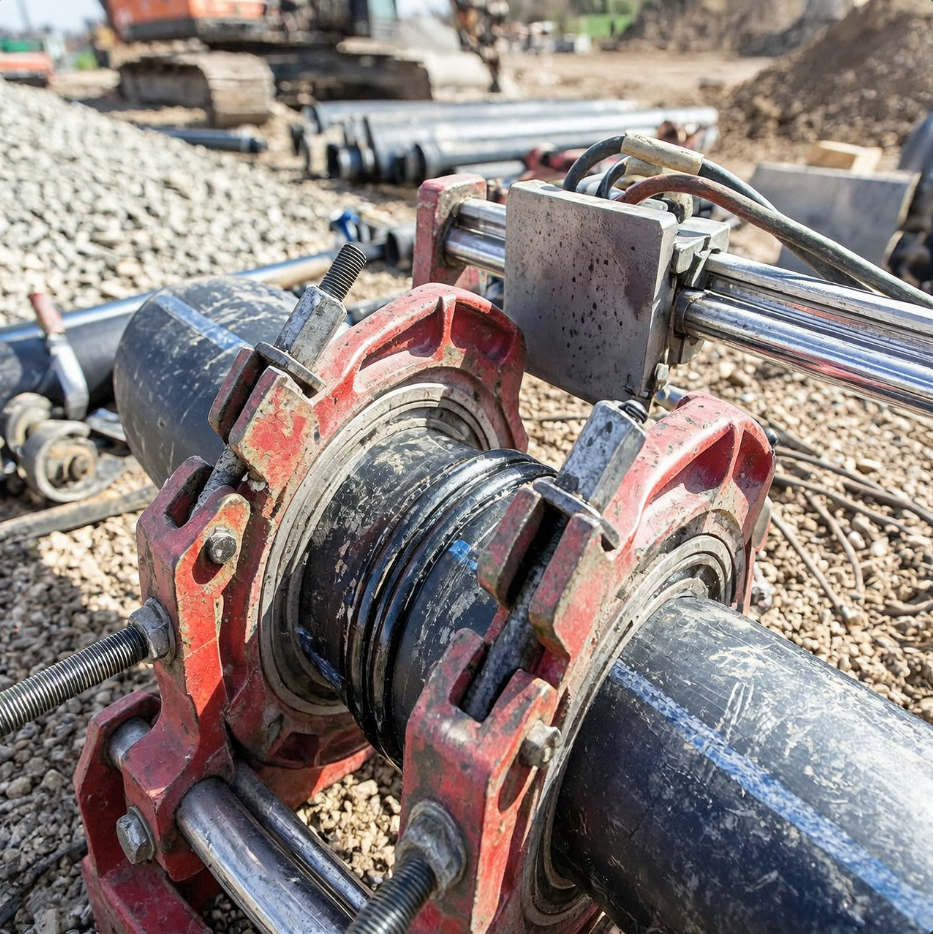
EN 13067 distinguishes between the roles assigned to the joining process of thermoplastic pipes. In investment practice, this means a clear separation of the execution responsibility from the inspection function. Each position involves a different level of knowledge, a different level of responsibility and a specifically defined scope of authority.
The execution profile includes the preparation of the elements to be joined, setting the parameters of the equipment and controlling the process. The person holding this qualification is responsible for the geometry of the joint and the conformity of the workmanship with the adopted technology. The scope of competence always refers to a specific method and diameter range.
The person responsible for supervising the pipe joining process focuses on verifying working conditions, analysing documentation and assessing technological parameters. His or her tasks include controlling the compliance of performed joints with the requirements of the standard and confirming the correctness of the entire process. This division of competences introduces transparency into the organisation of work and puts the relationship between the contractor and the technical supervisor in order.
Scope of the certificate and what it means in practice
The certificate issued in accordance with EN 13067 precisely defines the area of competence. The document indicates the joining method, the type of material, the diameter range and the position to which the competence is assigned. This makes it clear to which area a person can perform or inspect welding of pipelines.
Each of these elements has real technical significance. The method determines how the process is carried out and the range of parameters to be controlled. The type of material influences the working temperature, heating time and material characteristics during cooling. The diameter range determines the area in which qualification remains valid and relevant to the assembly conditions.
Assembly conditions and process flow
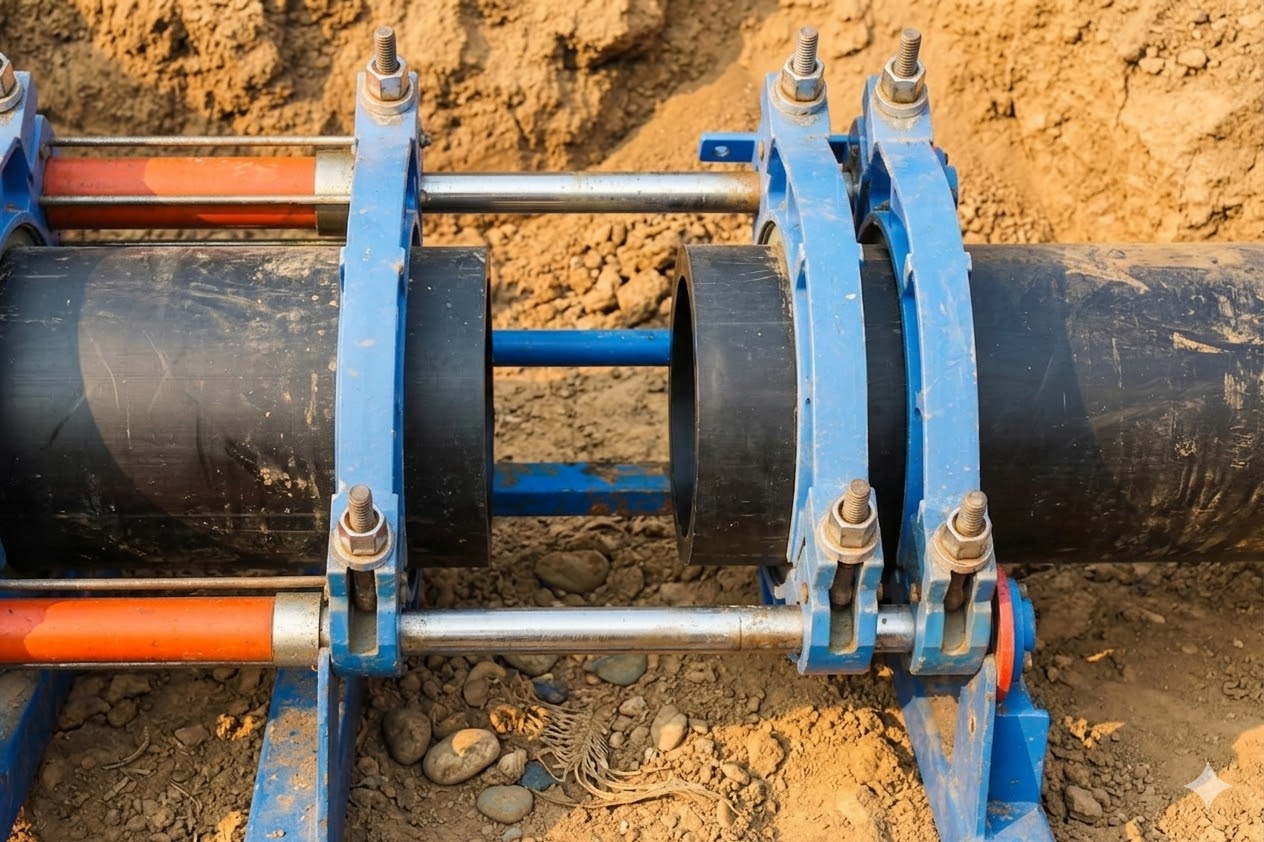
In assembly practice, working conditions rarely remain reproducible. Differences in ambient temperature, humidity, substrate stability or space availability affect the process already at the component preparation stage. Pipeline welding therefore requires the ability to assess the technical situation and adapt the parameters to the actual circumstances.
With larger diameters, it is important to maintain alignment and an even distribution of the contact force across the contact cross-section. In retrofit applications, it remains important to be able to make the connection in a confined space while maintaining the continuity of the system. The process is different in a workshop setting and in an excavation or industrial setting.
During the course, we work on real assembly configurations and analyse the influence of external factors on the process. This allows us to accurately assess the stability of parameters and predict the behaviour of the material under varying operating conditions.
Methods used in welding of pipelines
Two basic technologies dominate investment practice: butt and electrofusion welding. The former is mainly used for larger diameters and straight lengths, where it remains important to control the alignment of the components and the uniform distribution of pressure during joining. The stability of the hot-plate temperature, the heating time and the cooling phase affect the structure of the material at the interface. In the case of large sections, maintaining identical settings in successive joining cycles determines the durability and load bearing capacity of the joint.
Electrofusion technology is used more often in situations requiring precision installation, making branches or working in confined spaces. This method is based on components fitted with a heating conductor and the joining parameters are assigned to a specific fitting. Under such conditions, proper surface preparation and the compatibility of the process data with the settings of the welding cycle control device are crucial, and the range of techniques used also includes, among others:
- socket welding - used for smaller diameters, where the end of the pipe and the inside of the socket are heated simultaneously,
- socket welding (polyfusion) - used in PP indoor installations, requiring precise fitting of components,
- Saddle welding - used for making branches in existing pipelines,
- welding using electrofusion saddles - a solution that allows the connection to be made without interfering with the entire section of the installation,
- auxiliary techniques related to surface preparation and control of process parameters that affect the quality of the final joint.
Quality assessment and interpretation of results
The execution of the joint is only a step in the implementation of the jointing technology. The durability of the joint is also determined by its correct interpretation in the context of the adopted parameters and operating conditions. Analysis of the discharge, symmetry of the joint and the homogeneity of the material structure makes it possible to determine whether the heating and cooling cycle was stable. In systems operating under load, even small geometric deviations can affect the subsequent durability and reliability of the piping system.
Application of qualifications in investment practice
Certificates in accordance with EN 13067 have a direct bearing on the ability to participate in infrastructure and industrial projects. Increasingly, the requirements for the qualifications of personnel responsible for welding pipelines are indicated in the tender documents, and the scope entered on the certificate forms the basis for approval for specific work. In practice, competence is used in particular in areas such as:
- construction and modernisation of water supply and sewerage networks,
- gas installations and transmission mains,
- process pipework in industrial plants,
- media transport systems in energy and production facilities,
- projects requiring formal confirmation of the contractor's terms of reference.
Preparation for qualification
The course programme is designed to deepen technological knowledge and translate this into the ability to independently conduct a welding cycle according to the requirements assigned to the chosen method and diameter range. We discuss the properties of the materials used in piping, the relationship between machine settings and the behaviour of the material and the influence of implementation conditions on the joining process. Participants learn to consciously choose welding parameters and interpret the result of completed joints in relation to accepted technical requirements.
Participants work on workstations enabling joints to be realised under various assembly conditions, taking into account the specifics of the work being carried out. The completed joints are subjected to geometric and visual analysis in relation to the set parameters of the welding cycle and the evaluation criteria defined in EN 13067.
Examination and certification in accordance with EN 13067
Completion of the course involves verification of knowledge and practical skills in relation to the chosen technique for joining thermoplastic pipes. The correctness of the preparation of the components, the stability of the welding cycle parameters and the compliance of the completed joints with the criteria set out in EN 13067 are checked. The assessment also includes knowledge of the safety and documentation of the work.
Once a positive result is obtained, a certificate is issued indicating the welding method, type of material, diameter range and position - either executive or supervisory. The document is a formal confirmation of qualifications in the area of pipeline welding and can be presented for infrastructural, industrial and technological projects.
Those planning to participate in projects that require additional verification can take an exam before a commission from the Office of Technical Inspection or certification in the TÜV system. In the latter case, the qualification is internationally recognised and often required for projects outside Poland, particularly in the industrial and infrastructure sectors.
Who is the course for?
Welding of pipelines in the formula based on EN 13067 is aimed at fitters of thermoplastic installations and professionals responsible for supervising the joining process. The course is chosen by those starting out in the installation of water, gas and industrial networks, as well as by experienced fitters planning to extend their qualifications to another method or diameter range. The programme also meets the needs of companies preparing teams for infrastructure and industrial projects, where personnel qualifications are subject to formal verification.
Course delivery format
Classes are held in a training centre equipped with workstations that allow joints to be made under controlled technical conditions. Participants work on equipment used in the assembly of plants and process pipelines, which reflects real working conditions while maintaining stable welding cycle parameters.
The course can also be organised at the company's premises or at a location specified by the client. At the ERGON centre, we have our own technical facilities and mobile equipment, which allows us to conduct off-site classes using the centre's training equipment.
You are invited to sign up for the course
If you are interested in improving your qualifications in pipeline welding, please contact us for the next dates. We adapt the organisation of the training to the needs of the participants and the companies delegating employees.
FAQ:
Who is the course for?
The course is aimed at fitters of thermoplastic installations and professionals responsible for supervising the pipe joining process. Participants range from newcomers to pipe fitters to experienced fitters planning to extend their qualifications. The programme also meets the needs of companies preparing teams for projects requiring formal proof of competence.
What methods does the training include?
The training covers butt welding and electrofusion welding according to the scope defined in EN 13067. Participants make the connections themselves using both technologies, set the cycle parameters and monitor the heating and cooling process. Exercises are carried out on equipment used for the assembly of installations of various diameters, with analysis of the completed joints for compliance with the requirements of the standard.
What powers does the certificate confer?
The document confirms qualification in a specific welding method, material type and diameter range. The document also indicates the position - either executive or supervisory - which clearly defines the area of responsibility. The certificate forms the basis for approval to work on infrastructure and industrial projects and in tendering procedures requiring a certified qualification. In the case of TÜV certification, qualifications are also recognised for projects outside Poland.
What materials do participants work with?
During the course, we use pipes and fittings made of polyethylene (PE), polypropylene (PP) and polyvinyl chloride (PVC), and in selected ranges also polyvinylidene fluoride (PVDF). The exercises cover a variety of diameters and installation variants to replicate real working conditions for process and network installations.
Can training be organised in-house?
Yes. We deliver the course at the training centre, at the company's premises or at a location designated by the company. We have mobile technical facilities at our disposal, so we conduct off-site classes using our own equipment. This form allows us to prepare the team on site and to tailor the scope of the exercises to the specifics of the project.
Is experience required?
Participation in the course does not require a prior qualification. Those who are new to installation work will learn the basics of technology and the examination requirements according to EN 13067. Experienced contractors, on the other hand, can extend their qualifications or formally confirm their skills.
